



Two weeks after one phone call, four hostages walked free from Gaza...
A Note from James:
After the election, before Trump was sworn in for his second term, Biden’s national security team needed to reach the president-elect about the hostages in Gaza.
According to Bill O’Reilly, they couldn’t get through.
So who did they call?
Bill O’Reilly.
Bill says he set up the conversation, moderated it, and didn’t offer a single opinion. About two weeks later, four hostages were released.
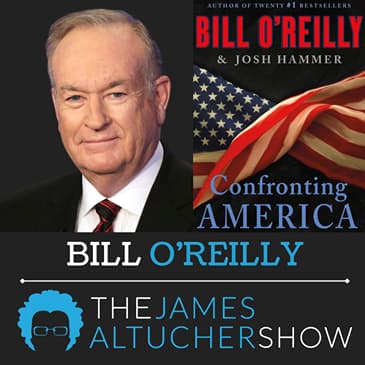
That story is a good example of his new book, Confronting America: What Has to Change.
Bill has spent more than 50 years around the people who make the news. Presidents. Political leaders. Media executives. Celebrities. He’s interviewed five presidents. He’s traveled around the world. And in this book, he names names. No anonymous sources.
It’s Trump. It’s Mamdani. It’s Soros. It’s Paul McCartney. It’s David Letterman.
In 1996, Bill launched The O’Reilly Factor. It was an opinion show that openly said it was an opinion show, and it became one of the biggest programs in cable news.
Now he runs his own media operations outside the traditional networks.
Fair warning: I was more opinionated in this interview than I usually am.
Bill has strong views on the media, Iran, New York City, the political parties, and where the country is headed. I pushed back in a few places, agreed with him in others, and the point is not that you have to agree with either of us.
Listen and decide for yourself.
At the end, I asked Bill about something he wrote in the book: his father’s final words were about never reaching his potential.
So I asked Bill whether he feels like he has reached his.
I expected him to say he was still chasing it.
He didn’t.
Episode Description:
Bill O’Reilly joins James to talk about Confronting America: What Has to Change, a book built from decades of firsthand encounters with presidents, political figures, media executives, and major events.
The conversation starts with O’Reilly’s account of helping establish communication between the outgoing Biden national-security team and President-elect Trump during negotiations over hostages in Gaza. From there, James asks what being close to power has taught him—and how much of what happens behind the scenes ever reaches the public.
They turn to the U.S.-Iran conflict, oil prices, the Strait of Hormuz, and the risks of making decisions when the consequences are difficult to predict. O’Reilly argues that the conflict became more complicated than initially expected, while James asks how media coverage shapes public perceptions of events like these.
That leads to a larger debate over political media. O’Reilly distinguishes the openly opinionated format of The O’Reilly Factor from what he sees as increasing ideological alignment inside news organizations. James pushes on whether opinion-driven cable news helped create that environment in the first place.
They also discuss the Trump administration’s fight with CNN, MS NOW, and Politico over White House access. Despite his criticism of those outlets, O’Reilly says he would have handled the dispute differently: keep them in the room, but don’t give them additional attention.
The conversation then moves to New York City politics, affordability, inequality, Mayor Zohran Mamdani’s agenda, municipal grocery stores, and the broader disagreement over how much government should intervene in markets. James is unusually explicit about his own views in this section, while O’Reilly explains how he sees the ideological divide reshaping both parties.
Near the end, James asks what changed when O’Reilly left corporate television and began running his own media operations. O’Reilly says independence gives him something he values more than reach: control over what he says and how he says it.
Finally, James asks about one of the most personal passages in the book. O’Reilly’s father died believing he had not fully realized his potential. Does Bill still feel the same pressure?
His answer is surprisingly settled. He wants to continue doing good work, but he no longer feels he has something left to prove.
What You’ll Learn:
- O’Reilly’s account of helping connect the Biden and Trump teams during Gaza hostage negotiations.
- Why he views the U.S.-Iran conflict as a major political and strategic risk.
- How James and O’Reilly think media bias, opinion programming, and White House press access have changed political journalism.
- Why O’Reilly says The O’Reilly Factor was designed to present strong opinions alongside competing viewpoints.
- How affordability, inequality, municipal grocery stores, and government intervention shape their debate over New York City politics.
- Why O’Reilly believes technology and partisan media environments are changing how voters understand politics.
- What running his own media companies taught O’Reilly about editorial independence and control.
- How his father’s final words shaped his thinking about ambition, achievement, and whether he has fulfilled his potential.
Timestamped Chapters:
[02:57] A Note from James
James introduces Confronting America, O’Reilly’s career, the political tone of the conversation, and the question he asks Bill about fulfilling his potential.
[04:21] Why This Book Is More Personal
James asks why Confronting America feels different from O’Reilly’s historical books and previous Confronting titles.
[04:55] Fifty Years Around Power
O’Reilly says his career gave him firsthand access to presidents, political figures, media executives, and major events he wanted to document.
[06:10] The Hostage Negotiation Story
James asks O’Reilly to explain his account of connecting the Biden foreign-policy team with President-elect Trump.
[07:44] Trump, Netanyahu, and the Transition of Power
James asks why Israeli Prime Minister Benjamin Netanyahu wanted Trump’s approval during the presidential transition.
[08:17] The Risk of the Iran Conflict
O’Reilly discusses Trump’s decision-making on Iran, the length of the conflict, and potential political consequences.
[09:37] Is Iran Near a Breaking Point?
James and O’Reilly discuss economic pressure on Iran, oil shipments, Hormuz, and the administration’s strategy.
[10:28] Why the Media Covers Bad News
James asks why negative stories often dominate political and economic coverage.
[11:50] Playing Devil’s Advocate
James challenges the idea that rising household assets necessarily constitute an exceptional news story.
[13:16] Did Opinion Television Change News?
James asks whether programs like The O’Reilly Factor helped push television toward more subjective political coverage.
[13:51] The O’Reilly Factor as an Op-Ed Show
O’Reilly says the distinction was that his program explicitly identified itself as opinion.
[15:32] Trump vs. CNN, MS NOW, and Politico
James and O’Reilly discuss the administration’s attempt to remove several media organizations from White House access.
[16:13] Press Freedom and Media Bias
O’Reilly makes his case that political alignment has damaged trust in corporate media.
[17:03] Why O’Reilly Would Have Kept Them in the Room
Despite his criticism of the outlets, O’Reilly says he would not have removed them from the White House.
[18:11] New York City and Zohran Mamdani
James openly states his own disagreement with the mayor and asks O’Reilly why Mamdani’s message connected with voters.
[19:01] Inequality, Affordability, and Anti-Establishment Politics
O’Reilly gives his interpretation of the economic frustrations behind Mamdani’s support.
[20:13] Candidates or Movements?
O’Reilly argues that modern elections increasingly represent competing political movements rather than just individual personalities.
[22:17] History, Populism, and Authoritarianism
James asks about lessons from historical authoritarian movements and what voters understand about political ideology.
[23:28] Technology and the Political Information Bubble
O’Reilly argues that smartphones and personalized media make it easier for people to construct information environments that reinforce existing beliefs.
[24:17] The Affordability Debate
James and O’Reilly discuss cost of living and whether political rhetoric matches policy outcomes.
[25:26] Does Mamdani Believe His Own Policies?
James asks whether the mayor’s economic positions are strategic or sincerely held.
[26:05] The Municipal Grocery Store Debate
James and O’Reilly discuss grocery margins, city-backed stores, subsidies, bodegas, and government intervention in consumer markets.
[27:35] George Soros and Criminal-Justice Policy
James asks O’Reilly about his criticism of George Soros and organizations supporting progressive prosecutors.
[29:14] Life After Fox News
James asks what changed when O’Reilly went from hosting a corporate television program to running his own media businesses.
[30:33] Editorial Independence at The Factor
O’Reilly describes the autonomy he says he had during most of his years at Fox and how he wanted the program to attract viewers across political lines.
[31:27] When Cable News Became an Echo Chamber
O’Reilly criticizes the modern tendency to build panels and programming around people who largely agree with one another.
[32:08] Did Bill O’Reilly Fulfill His Potential?
James asks whether O’Reilly still feels driven by his father’s final words.
[32:24] “I Don’t Know What Else I Gotta Do”
O’Reilly says he no longer feels he has another major quest to complete, though he still wants to make good programs and grow his current work.
Additional Resources:
- Confronting America: What Has to Change
- Bill O’Reilly — Official Website
- NYC Municipal Grocery Store Program
See Privacy Policy at https://art19.com/privacy and California Privacy Notice at https://art19.com/privacy#do-not-sell-my-info.